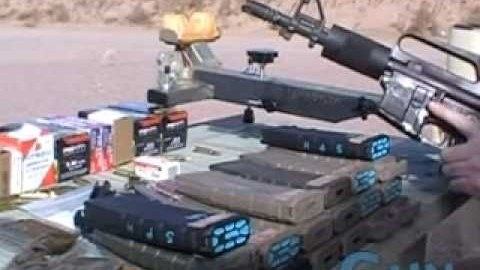
How much velocity does a short barrel cost? Gun Websites spent a full day at the range running a stack of .223 and 5.56 loads over a chronograph through five AR-15s of different lengths.
The setup
- A 7.5-inch AR pistol with a 1:9 twist, a 10.5-inch barrel, two 14.5-inch rifles with different rifling, and a 16-inch rifle.
- Loads ran from 55-grain .223-pressure ammunition up through heavier bullets, then the same progression in 5.56.
- Each load went through all five barrels over a chronograph, with the readings logged for comparison.
A first look at the numbers
- The first strings, 55-grain .223 from the 7.5-inch pistol, read roughly 2,100 to 2,200 feet per second, well below what the same load makes from a rifle-length barrel.
Lessons from the day
- The plan was to test accuracy too, but velocity alone filled the day. A test of this size takes more time and magazines than you expect.
- Fewer loads per session makes a more manageable test.
Why it matters
- Barrel length changes velocity, and velocity changes trajectory and terminal performance.
- Check how your chosen load performs from your barrel length, not the length printed on the box.
- Only fire 5.56 in a chamber rated for it.
More
Based on a video from the Gun Websites YouTube channel. New to the AR-15? Start with Where To Start.