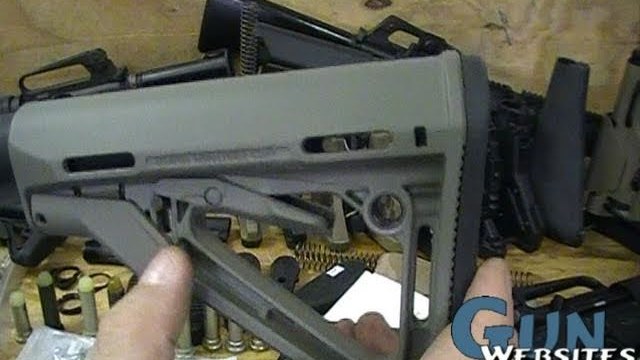
The stock is more than a place for your cheek. It is part of the AR-15’s operating system. The first video in the Gun Websites AR15 Stocks series explains how the parts work together.
How the AR cycles
- When a round fires, some gas is diverted at the gas block, travels back through the gas tube and drives the bolt carrier rearward.
- The bolt carrier is as long as the upper receiver, so when it moves back it needs somewhere to go.
- That is the job of the receiver extension, which most people call the buffer tube.
Inside the buffer tube
- Spring: pushes the bolt carrier forward again to chamber the next round.
- Buffer: sits between the spring and the bolt carrier, giving the carrier a proper surface to push against and adding weight that helps the action run correctly.
- Detent: a small spring-loaded pin at the front of the tube that keeps the buffer and spring from sliding out when the upper is opened.
Taking it apart
- Open the upper and remove the bolt carrier.
- Press the detent down and the buffer and spring slide out.
- To reinstall, slide in the spring, push the buffer past the detent, then replace the carrier and charging handle. You can see how buffer and carrier line up in one straight channel.
Holding it together
- The threaded end of the receiver extension screws into the lower receiver.
- A receiver end plate and castle nut lock it in place. Some end plates include a quick-detach sling socket.
- The stock rides on the tube, usually with some form of butt pad.
Takeaways
- Understanding the buffer system makes stock swaps and troubleshooting much easier.
- Stake the castle nut so it cannot back off.
- See the AR15 Stock and Receiver Extension pages.
Based on a video from the Gun Websites YouTube channel. New to the AR-15? Start with Where To Start.